Top scientist bemoans Britain’s ‘third-worldish’ research hubs
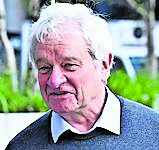
Universities in the UK look “increasingly third-worldish” compared with their Chinese rivals, the incoming president of Britain’s most prestigious scientific body says.
Sir Paul Nurse, 76, who is returning to lead the Royal Society for a second time, said China was pressing ahead with vast research investment while scientists in Britain and the US faced tight budgets and, in some fields in the US, politically driven constraints on what they were allowed to study.
He said: “If you go now to try and visit the growing science cities [in China], they are incredibly impressive. When I go and visit our universities and look at the infrastructure that we’ve got, it is looking increasingly third-worldish to me in comparison.”
China, he added, “sees that science is going to drive their economy … it’s like chalk and cheese, the thinking”.
In 2023 Nurse led a review that concluded the UK research landscape was “fragile, in jeopardy and needs fixing”.
By contrast, China’s focus is already paying dividends. The same year as Nurse’s review, it overtook the US for the first time in the Nature Index, which tracks high-quality papers in leading journals across the life sciences, physics, chemistry and earth and environmental sciences. When these fields are taken together, China produces more top-tier studies than any other country, though the US still leads in health research.
Nurse, a Nobel prize-winning cell biologist who previously led the Francis Crick Institute, said the political climate in the US risked accelerating the shift away from the West. He added: “I go often to the US. There’s no question about it: scientists there are scared.”
He criticised the Trump administration for “attacks on the independence of funding agencies”, and the abrupt cancellation of politically contentious work. Nurse said: “Anything to do with climate, for example, is just suddenly eliminated … even just getting data to know what to do is now not allowed. It’s something you would imagine more in Russia than in America, really.” When asked whether the situation bore comparison with that of the Soviet Union, when Trofim Lysenko, an agronomist favoured by Stalin dismissed genetics as bourgeois pseudoscience and drove genuine biologists out of their posts, Nurse said: “It’s in the same direction. In Russia people who objected to Lysenko got executed. So we’re not quite there, or anywhere near there. But what we are seeing is … ideology driving what they pretend to be science.”
Younger scientists were already avoiding the US and looking to Europe, including Britain, instead, he said.
The UK has long punched above its weight, producing nearly 60 per cent more academic papers than the US and six times more than China in per capita terms, according to a Cambridge University report released last year.
Even so, Nurse sounded a warning over UK science funding. The government’s direct contribution — about 0.5 per cent of GDP — leaves Britain only about halfway down the league table of OECD [Organisation for Economic Co-operation and Development] nations. He said: “This isn’t brilliant.”
Nurse also suggested Reform had shown little interest in science, adding: “They have made statements about climate change which echo the US … So they’re turning their back on the problem and not looking at evidence.”


No comments:
Post a Comment