Friday, December 5, 2025

DV25018 UK failing in Research V01 051225

 Top scientist bemoans Britain’s ‘third-worldish’ research hubs

Rhys Blakely - Science Editor

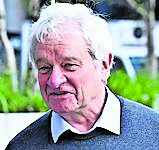
Sir Paul Nurse, back in charge of the Royal Society, said China was forging ahead 

Universities in the UK look “increasingly third-worldish” compared with their Chinese rivals, the incoming president of Britain’s most prestigious scientific body says.

Sir Paul Nurse, 76, who is returning to lead the Royal Society for a second time, said China was pressing ahead with vast research investment while scientists in Britain and the US faced tight budgets and, in some fields in the US, politically driven constraints on what they were allowed to study.

He said: “If you go now to try and visit the growing science cities [in China], they are incredibly impressive. When I go and visit our universities and look at the infrastructure that we’ve got, it is looking increasingly third-worldish to me in comparison.”

China, he added, “sees that science is going to drive their economy … it’s like chalk and cheese, the thinking”.

In 2023 Nurse led a review that concluded the UK research landscape was “fragile, in jeopardy and needs fixing”.

By contrast, China’s focus is already paying dividends. The same year as Nurse’s review, it overtook the US for the first time in the Nature Index, which tracks high-quality papers in leading journals across the life sciences, physics, chemistry and earth and environmental sciences. When these fields are taken together, China produces more top-tier studies than any other country, though the US still leads in health research.

Nurse, a Nobel prize-winning cell biologist who previously led the Francis Crick Institute, said the political climate in the US risked accelerating the shift away from the West. He added: “I go often to the US. There’s no question about it: scientists there are scared.”

He criticised the Trump administration for “attacks on the independence of funding agencies”, and the abrupt cancellation of politically contentious work. Nurse said: “Anything to do with climate, for example, is just suddenly eliminated … even just getting data to know what to do is now not allowed. It’s something you would imagine more in Russia than in America, really.” When asked whether the situation bore comparison with that of the Soviet Union, when Trofim Lysenko, an agronomist favoured by Stalin dismissed genetics as bourgeois pseudoscience and drove genuine biologists out of their posts, Nurse said: “It’s in the same direction. In Russia people who objected to Lysenko got executed. So we’re not quite there, or anywhere near there. But what we are seeing is … ideology driving what they pretend to be science.”

Younger scientists were already avoiding the US and looking to Europe, including Britain, instead, he said.

The UK has long punched above its weight, producing nearly 60 per cent more academic papers than the US and six times more than China in per capita terms, according to a Cambridge University report released last year.

Even so, Nurse sounded a warning over UK science funding. The government’s direct contribution — about 0.5 per cent of GDP — leaves Britain only about halfway down the league table of OECD [Organisation for Economic Co-operation and Development] nations. He said: “This isn’t brilliant.”

Nurse also suggested Reform had shown little interest in science, adding: “They have made statements about climate change which echo the US … So they’re turning their back on the problem and not looking at evidence.”

Thursday, December 4, 2025

DV25017 IoT at Rolls Royce. V01 041225


How IoT is turning Rolls-Royce into a data-fuelled business 

Amit Roy Choudhury and Jim Mortleman — January 2018 

By embedding IoT sensors right across its product lines and manufacturing facilities, the global engineering giant has come to view data — and the services it can deliver — as a strategic asset.

Is Rolls-Royce an engineering company that generates lots of data or a data-rich company that produces market-leading engines?

This may sound like a trick question given the context of the UK-headquartered company’s history of innovation in the aerospace, defense, energy and marine industries. But the question reflects the digital transformation that’s underway at the £13.8 billion ($18.6bn) company, much of which is being fuelled by the industrial Internet of Things (IoT).

Data generated by IoT sensors — aggregated and analyzed in the cloud — is providing Rolls-Royce with unprecedented insight into the live performance of its products — from jet engines and helicopter blades to power generation systems and marine turbines. And that data capability is rapidly evolving beyond just predicting equipment issues and maintenance requirements to providing customers with valuable aftermarket services that range from showing airlines how to optimize their routes to keeping a survey ship in position in heavy seas.

Sachin Gupta, Rolls-Royce’s Singapore-based chief of IoT capabilities, outlines the fundamental ambition: “To leverage the data generated by IoT sensors to make better decisions and optimize customers’ — and Rolls-Royce’s — operations.”

In-flight analyticsThe scale and sophistication of the big data challenge is truly astonishing. A modern passenger jet such as a Boeing 787 generates an average of 500GB of data per flight and several terabytes on long-haul routes. The thousands of sensors in each Rolls-Royce engine track everything from fuel flow, pressure and temperature to the aircraft’s altitude, speed and the air temperature, with data instantly fed back to Rolls-Royce operational centers. And the company’s civil aircraft availability center is continuously monitoring data from 4,500 in-service engines.

“Rolls-Royce


Compared to that data collection challenge, the analytics side of IoT might seem less daunting. “We move all the data to the cloud — Microsoft Azure — and tap into an ecosystem of small, specialist third parties to analyze different parts of the dataset,” says Paul Stein, Rolls-Royce’s CTO.

Paul Stein, CTO, Rolls-Royce.jpg
Paul Stein, CTO of Rolls-Royce

The company has also IoT-enabled key elements of its factories. “All the data is pulled up to the cloud so manufacturing directors can visualize everything happening in the factory,” says Stein. As a measure of the scale, the production of 6,000 engine fan blades each year generates around 3 petabyes of data.

But the big data challenge is not all focused on aircraft. Stein points to another example involving specialist marine engines. Customers exploring for oil and gas need dynamic positioning systems that keep a ship in an exact position even when it is being buffeted by heavy seas. That requires very efficient sensors and sophisticated control algorithms, says Stein. “Moreover, those customers are now also asking us to provide the ability to sense faults and carry out repairs on ships remotely,” he says. 

The application of IoT at both ends of the supply chain creates a virtuous circle, Gupta highlights, with insight from operational data fed directly back into design and production. “If the product [autonomously] sends feedback to our design team on the issues faced during its lifecycle then they in turn can provide feedback to our production team,” says Gupta, with the teams making any necessary improvements.”
New innovation models

Sachin Gupta, chief of IoT capabilities at Rolls-Royce

The pursuit of that kind of excellence extends beyond Rolls-Royce’s own walls. “We want to push the technology to the next level and drive innovation together with different industry players, end-users and start-ups to see how we can develop and embed the technology into our business,” says Gupta. For example, Rolls-Royce recently embarked on a collaboration with A*STAR, Singapore’s agency for science, technology and research, to set up smart manufacturing and IoT centers. This includes a laboratory aimed at developing IoT sensors using advances in nanotechnology and microelectronics, and a computational science development laboratory.

Rolls-Royce has had a long-standing R&D and manufacturing presence in Singapore, where it assembles and tests Trent aero engines, manufactures titanium fan blades, and provides airline customers in Asia-Pacific with customer service.

In another data-centric initiative, the company recently launched R2 Data Labs to act as an acceleration hub for data innovation. “Using advanced data analytics, industrial artificial intelligence and machine-learning techniques, R2 Data Labs will develop data applications that unlock design, manufacturing and operational efficiencies within Rolls-Royce, and creates new service propositions for customers,” the company says. At its heart, Data Innovation Cells will comprise experts drawn from multiple disciplines across the company and apply cutting-edge DevOps principles to “rapidly explore data, test new ideas, and turn those into new innovation and services.”

“The ideal IoT device? Something small enough to put into a bolt-head, able to communicate anywhere, provide its manufacturing and environmental history and only responds to authorized requests.”

However, as CTO Stein points out, the sense of what’s possible is running ahead of the technology capabilities. “The next stage is to connect devices, customers’ assets, tooling, aircraft, airport facilities and so on. But the technology available today to do that is quite clunky,” he says. Rolls-Royce’s requirements present some very tricky challenges for IoT technology. Jet engine temperatures can rise to 1,700ºC, and even the coolest part of an engine runs at 350ºC. Other electronic sensors have to sit on the engine fan case, and to work reliably at temperatures as low as -60ºC. In harsh marine environments, meanwhile, sensors must withstand the massive shock forces produced by 120-tonne propellers milling oceanic ice as they spin. And the neutron flux in a nuclear reactor kills IoT electronics after only a very short period of exposure.


With such conditions in mind, Stein paints a picture of an ideal IoT device. “We’d like something small enough to put into every bolt-head that can communicate anywhere in the world and give us some history – such as where it was manufactured and whether it’s been subject to physical force beyond its specification. It should also only respond to authorized requests and be impossible to spoof.”

• Sachin Gupta was a keynote speaker at the Fujitsu Asia Conference in Singapore; Paul Stein was keynoting at IoT Tech Expo 2017 in London.


Tweet
Share on LinkedIn
Share on Xing
Share

Your choice regarding cookies on this site

Our website uses cookies for analytical purposes and to give you the best possible experience.

Click on Accept to agree or Preferences to view and choose your cookie settings.


Monday, December 1, 2025

DV25016 Occupation Specific Apps V01 011225

 Aviation staff app gets off to flying start


Tracey Boles

Hundreds of members and several new business partners have climbed aboard the Club Aviator app since the “onestop shop” for aviation professionals was launched in October.

Designed with the lifestyle of pilots and cabin crew in mind, Club Aviator offers curated global recommendations — from restaurants and rooftop bars to cultural spots off the beaten track — and up-to-date travel news.

Members can join a community, share itineraries and meet fellow globetrotters. Benefits include membership partnerships with the travel clubs, retail and hospitality companies that have joined the app.

Club Aviator is the brainchild of Maggie Draycott, an entrepreneur and former senior executive at British Airways, who was named one of Condé Nast Traveller’s 50 most influential travellers in 2017.

Draycott said: “As a first-time woman entrepreneur in the digital world, for me the ultimate prize would be to see more people connect, make new friends globally and enjoy their lives a bit more. I’d love it to be a one-stop shop, their go-to app for all our members to help them keep sane during their layovers or in their day-today lives.”

Every night, there are 2,000 crew in New York City. There are an estimated 11 million aviation professionals working across the industry.

The app, which can be downloaded on Apple and Android devices, is backed by private investors after a fouryear product research and development process.

DV26001 Book Summary - Critical Theory and the Digital. V01 220126

  Critical Theory and the Digital. David M.Berry (2014). Bloomsbury Academic ISBN 9781501310966 Introduction   In the Introduction to Critic...